01
Fluid Terrain
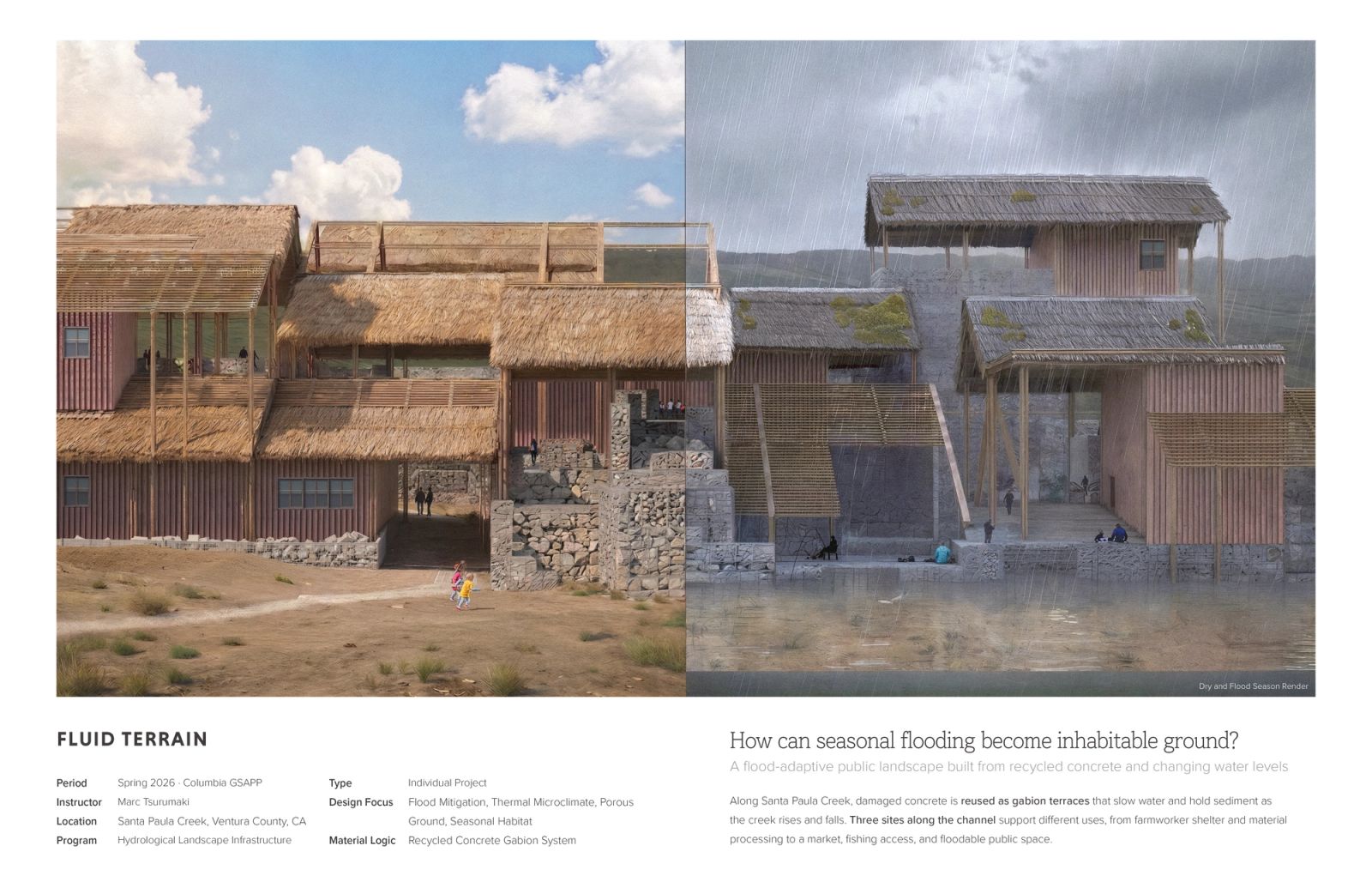
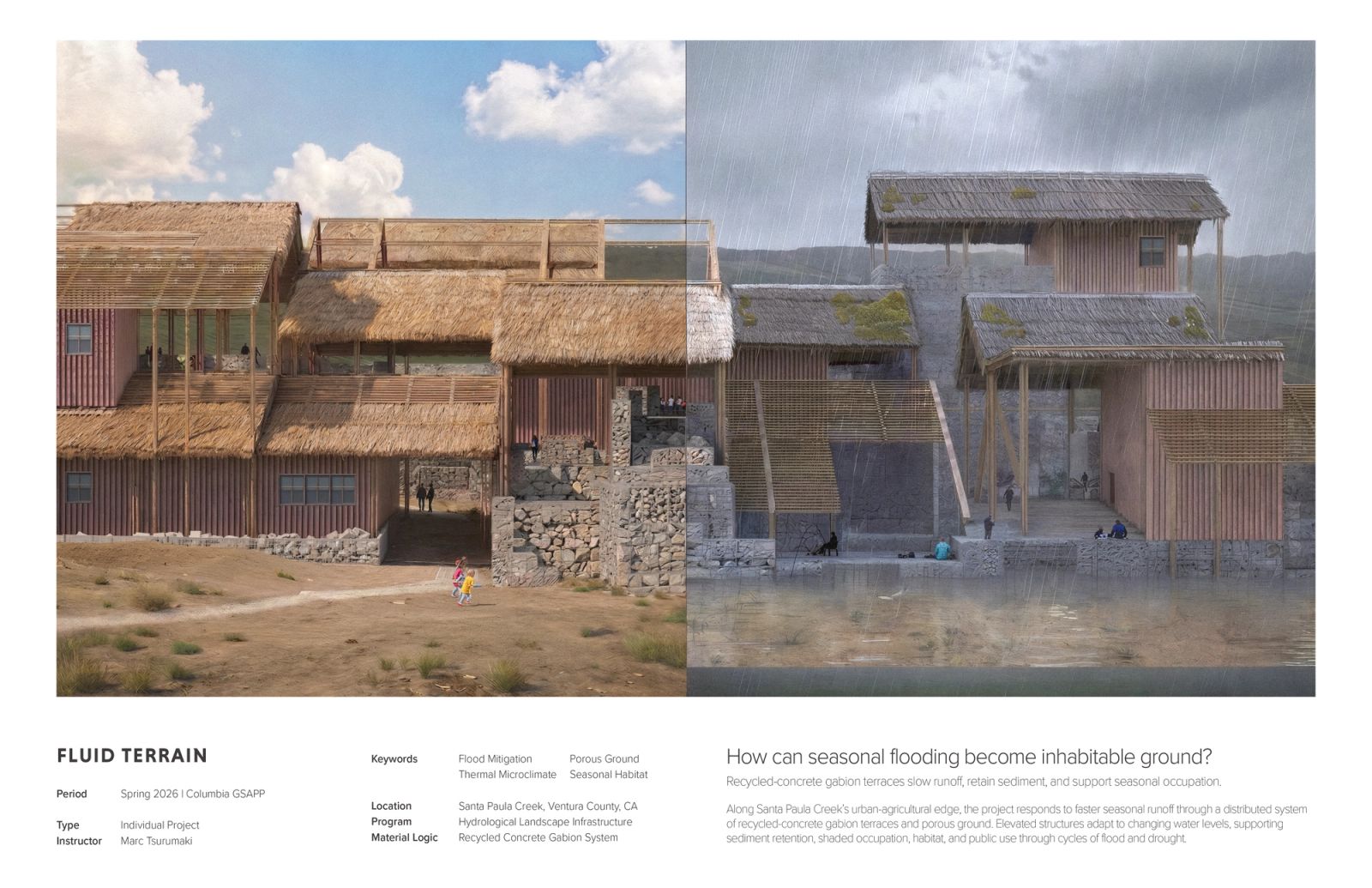
A porous gabion landscape built from recycled concrete that slows floodwater and supports seasonal habitation along the creek edge. Elevated structures and terraced ground adapt to shifting water levels across flood and drought cycles.
Read moreRead less
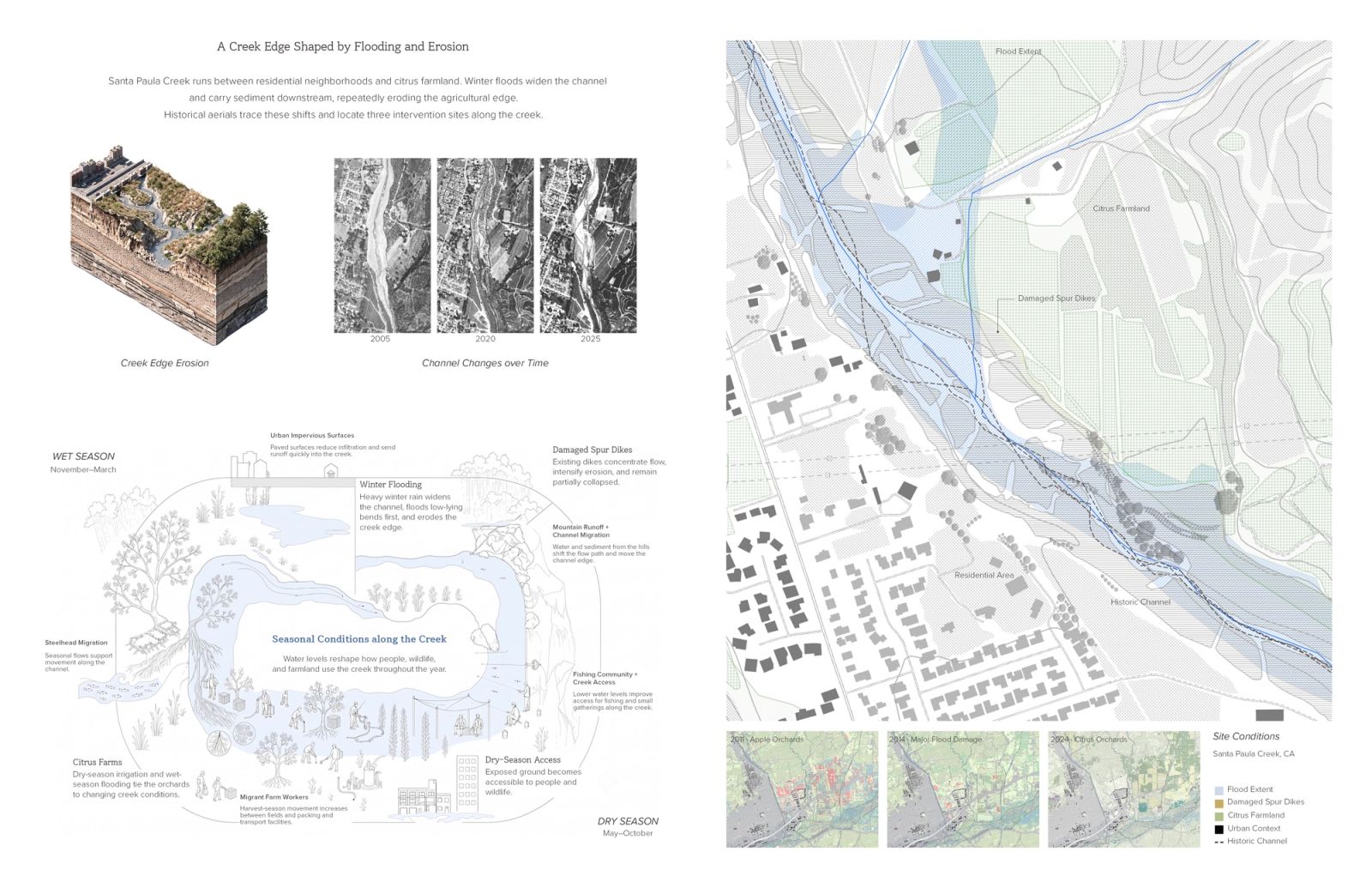
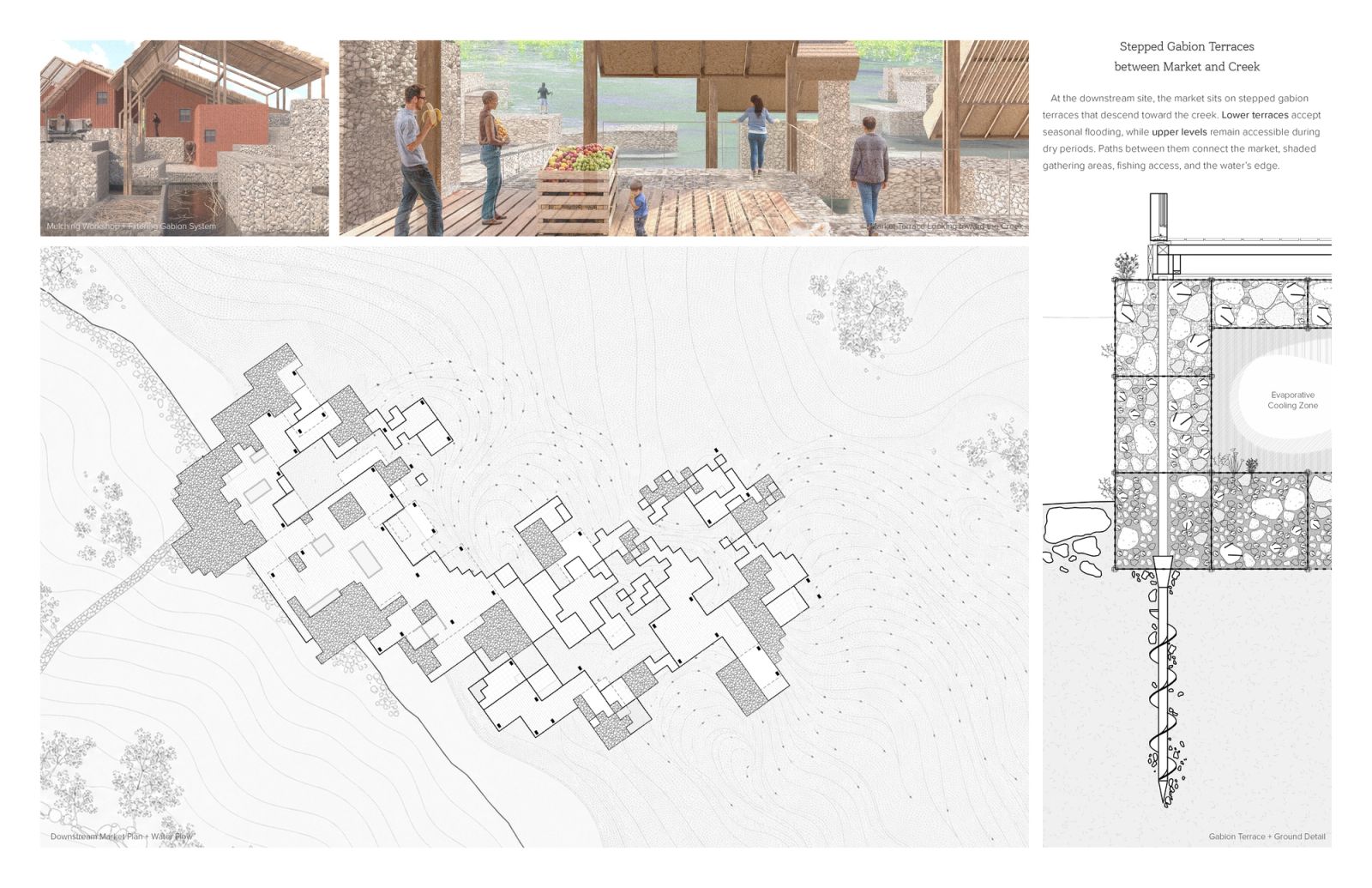
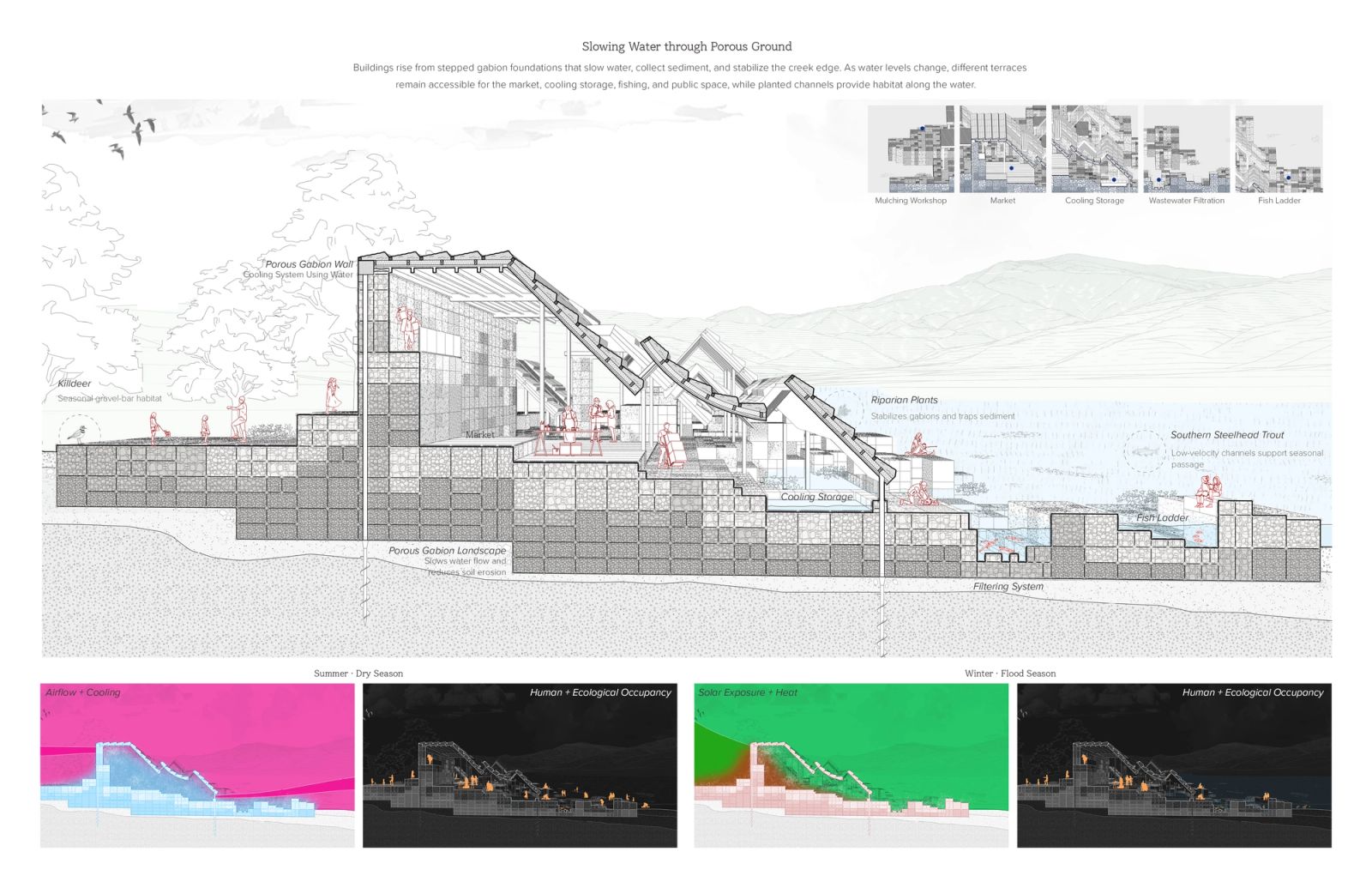
The project opens with a direct question: how can seasonal flooding become inhabitable ground? Along Santa Paula Creek's shifting boundary between urban development and farmland — where seasonal floods accelerate erosion, displace material, and intensify ecological pressure — the proposal distributes three linked interventions along the corridor: an upstream cooling and irrigation landscape with a farmworker resting platform, a midstream water-filtration and mulching workshop, and a downstream market and fishing landscape on a creek-edge community platform. Each is calibrated to a year-round cycle of precipitation, agricultural labor, soil nitrogen loss, and flood pressure mapped in the site research.
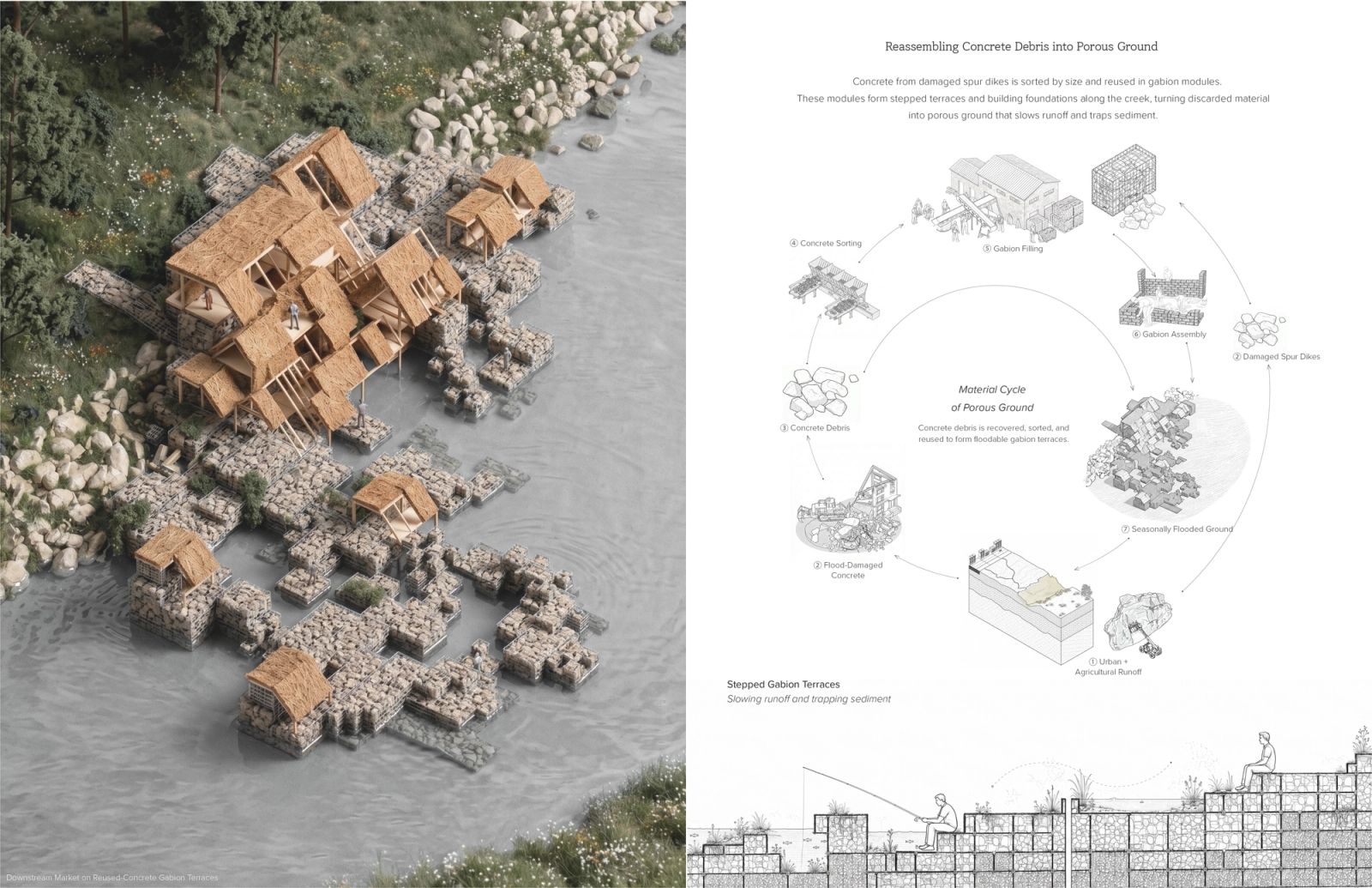
The material logic closes a local loop. Concrete debris from the creek's damaged spur dikes is crushed, sorted, and packed into gabion cages that become the terraced, water-permeable ground, while timber frames, hemp-lime walls, and thatched roofs weather and renew on their own cycles, letting the architecture adapt as ground and climate conditions change. The gabion mass also works as a cooling ground, and the long section shows the terraces shared across species: killdeer nesting on exposed gravel bars, riparian plants stabilizing sediment, and Southern steelhead trout migrating through slow gabion channels and a fish ladder as the terraces alternate between summer dry season and winter flood season.
- Period
- 2026 Spring · Columbia GSAPP
- Location
- Santa Paula Creek, Ventura County, CA
- Program
- Hydrological landscape infrastructure
- Team / Credits
- Individual · Instructor Marc Tsurumaki