05
Shadow Archive: Inverse Preserve
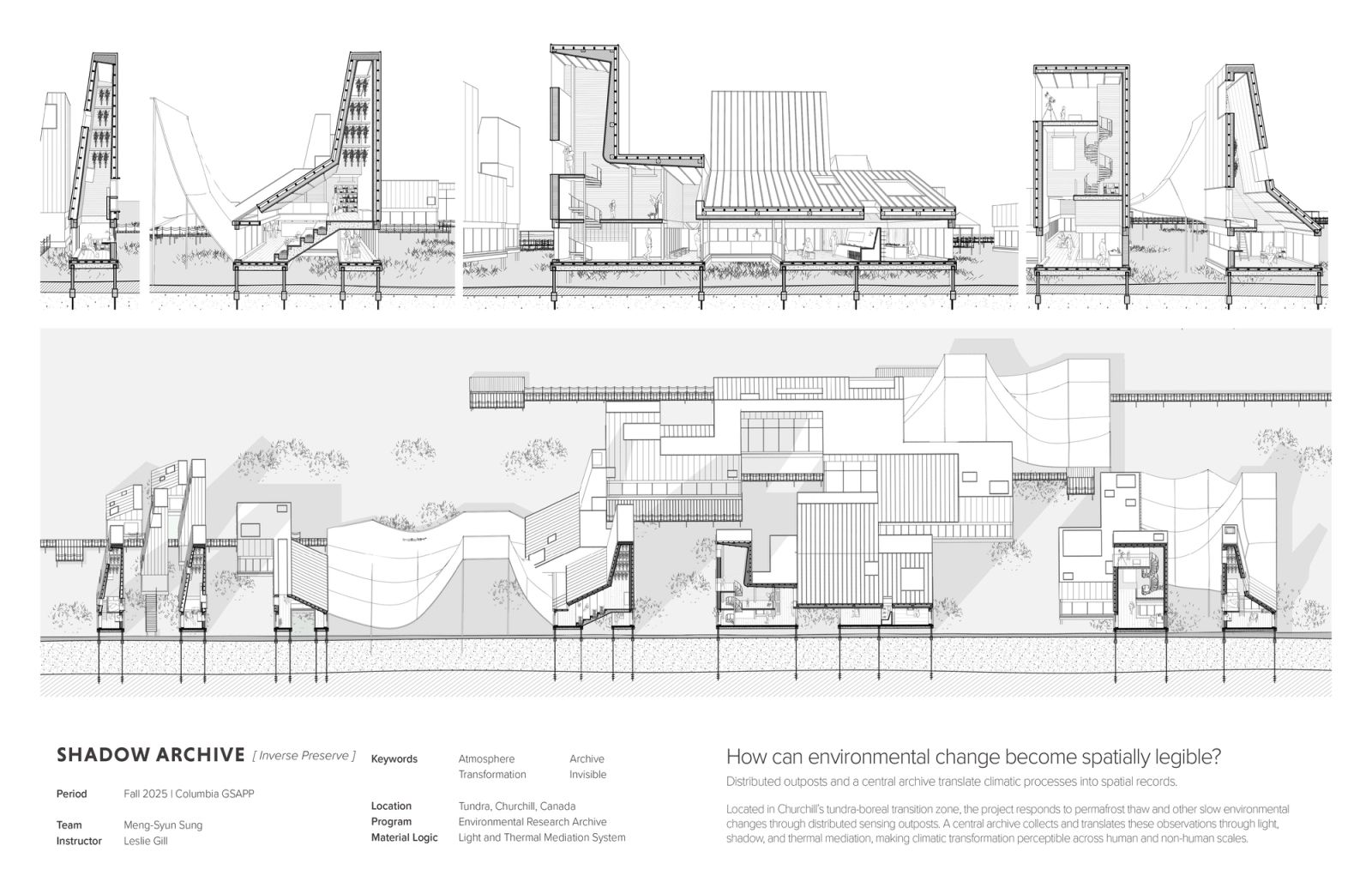
A distributed archive in the tundra-boreal transition zone. Moving volumes cast fields of prolonged shade that stabilize thawing ground, turning shadow itself into a preservation strategy.
Read moreRead less
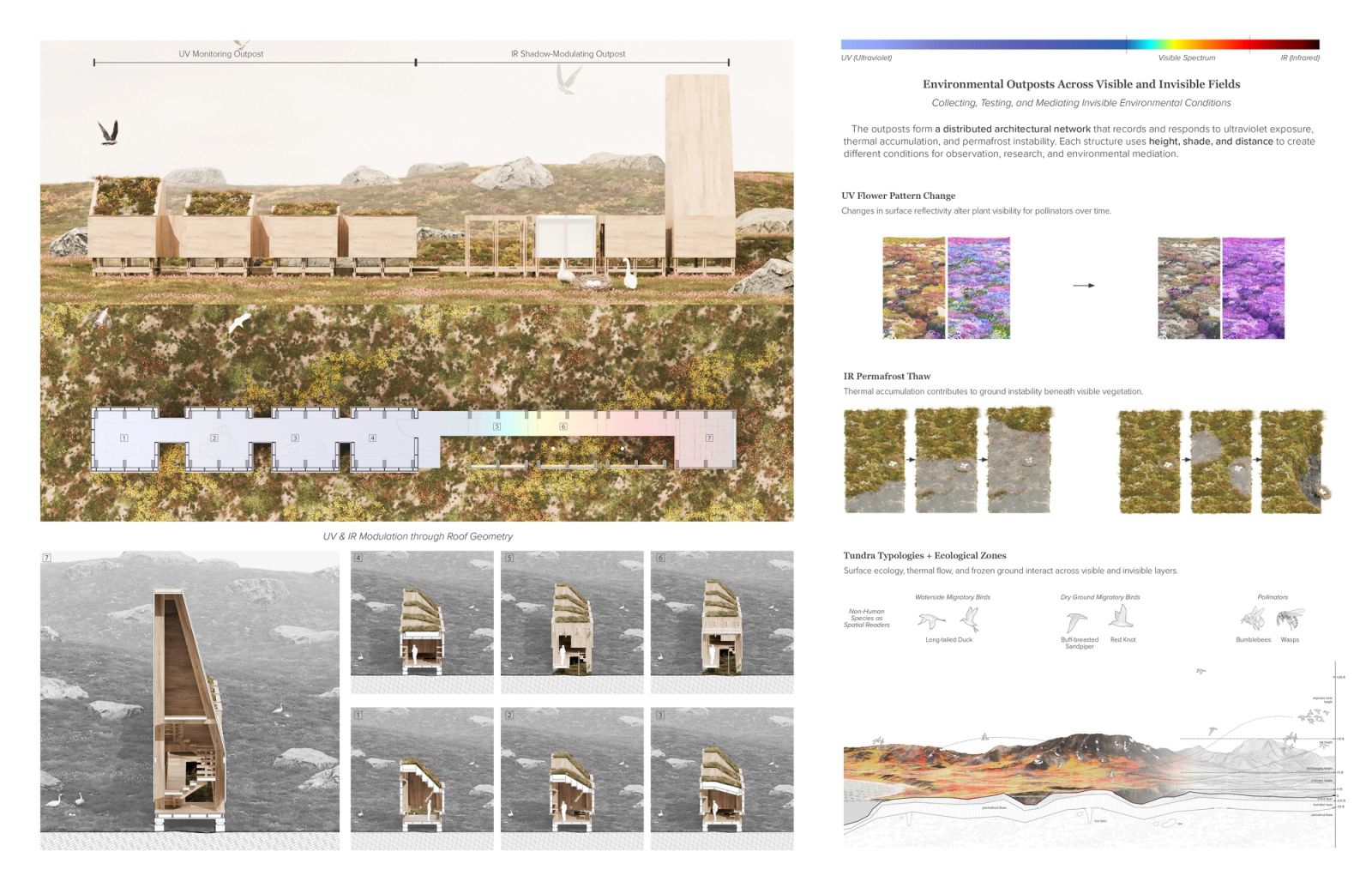
The project asks how environmental change can become spatially legible. In Churchill's tundra, permafrost thaw and shifting ultraviolet exposure unfold below the threshold of everyday perception, so the architecture is conceived as an instrument for reading them: a network of outposts records ultraviolet exposure, thermal accumulation, and permafrost instability, each structure using height, shade, and distance to create distinct conditions for observation and environmental mediation.
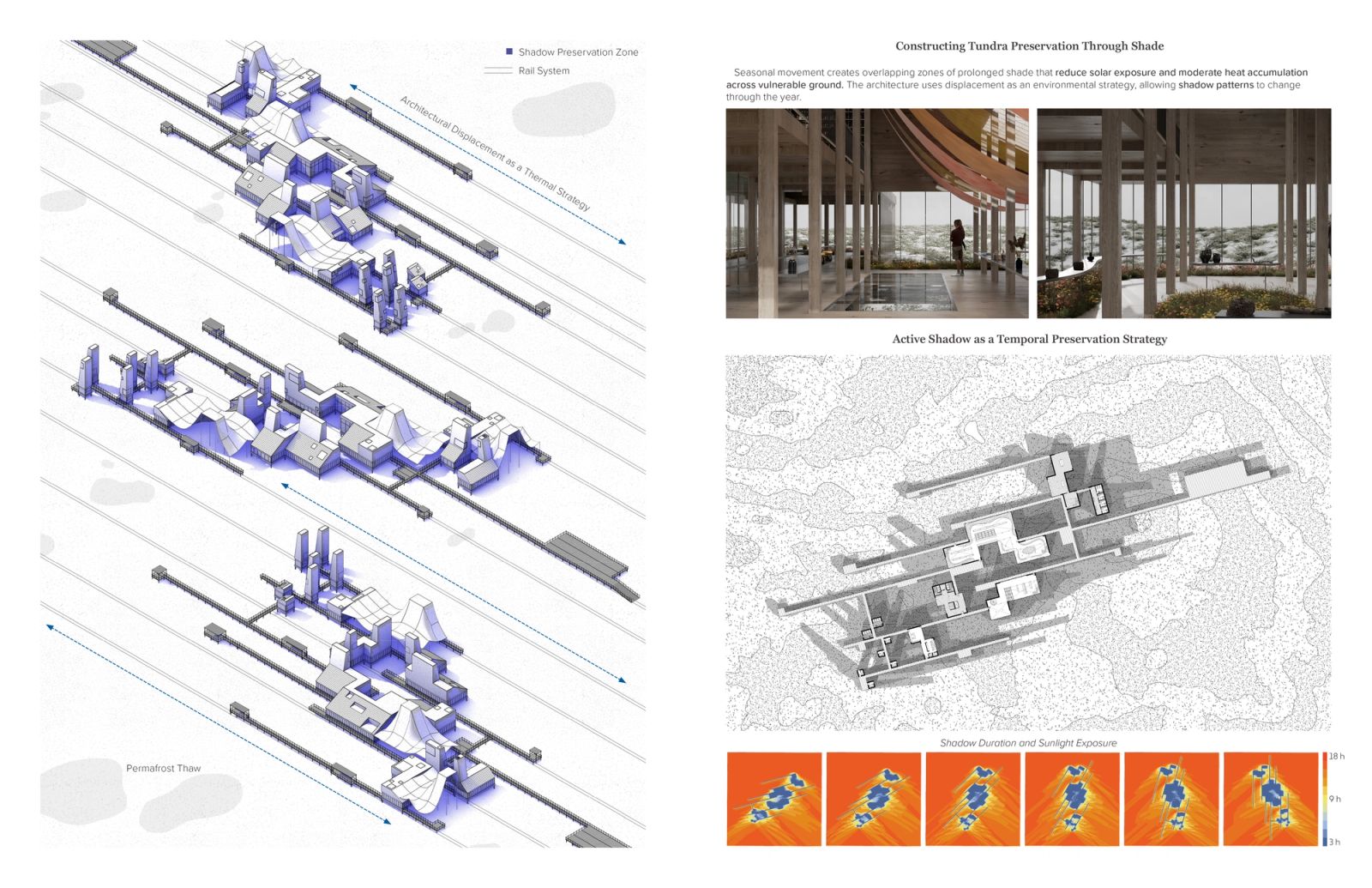
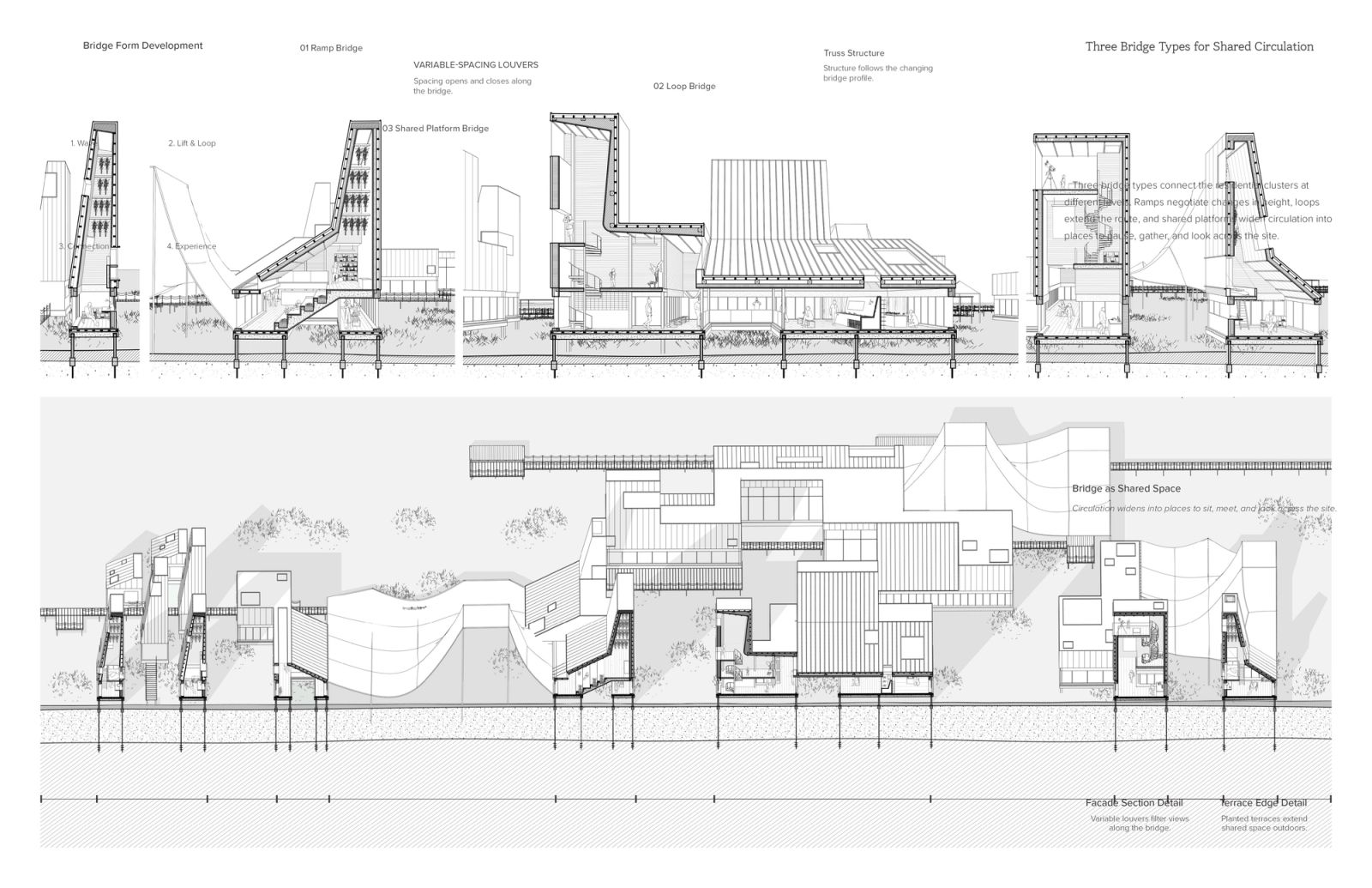
A central archive collects these observations and translates them through light, shadow, and thermal mediation. Displaced seasonally along a rail system, the volumes change their shade patterns through the year, with shadow-duration studies calibrating where shade lingers longest over vulnerable ground. In section, dormitories, laboratories, exhibition spaces, and observatories alternate with non-human zones, keeping ecological processes present within the occupied building.
- Period
- 2025 Fall · Columbia GSAPP
- Location
- Churchill, Canada
- Program
- Environmental research archive
- Team / Credits
- With Meng-Syun Sung · Instructor Leslie Gill